Writing The Heirloom

Story ideas are elusive. They usually sneak up on me, a little idea here, another there, until one day I have a number of characters, a gestational plot and some themes flitting about in my head.

In the case of The Heirloom, I began thinking I’d like to write a story about a ‘witch’ but not one set during a historical witch hunt, nor one steeped in big magic, more the everyday kind of historical wise woman who finds herself mired in trouble. The setting snuck up on me during research when I found that Sussex had a long history of ‘witchery’, but no one had ever been executed for it. The fact that some of my distant ancestors hailed from there added to the allure. And somehow a little family secret about one ancestor marrying her deceased husband’s nephew inspired another story thread.
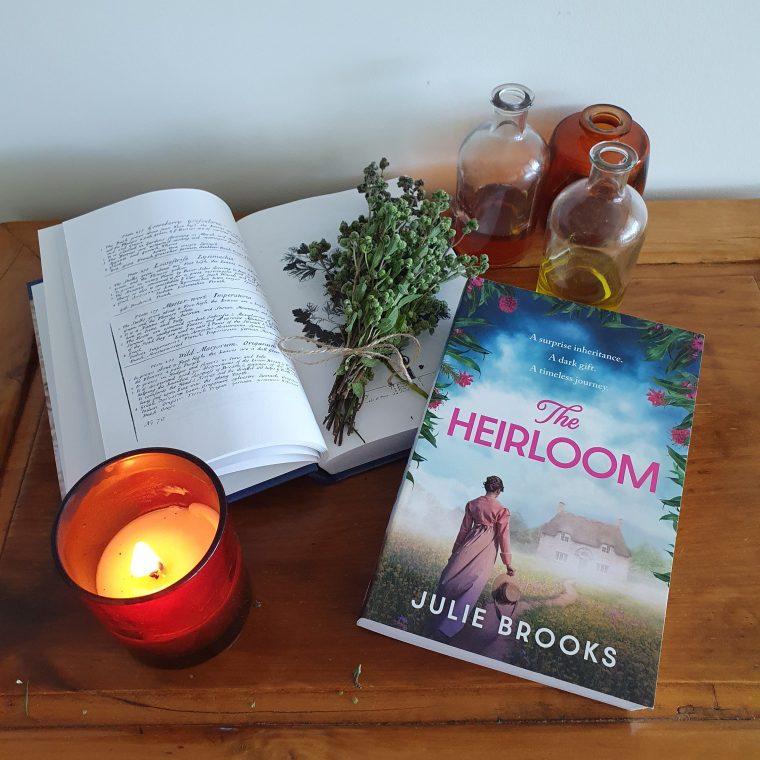
A week driving about East and West Sussex researching the locations, architecture and countryside provided plenty of research material once I returned home to Australia. I pored over maps and photographs I had taken, especially those from a visit to the Weald and Downland Living Museum near Chichester. This reconstructed village helped me picture the cottage where my main character, Philadelphia grew up, and the garden she and her mother Susanna tended.

For the Queensland settings, I lived in Brisbane as a child and have spent many holidays there since. The Brisbane River is a powerful presence throughout the city, winding through its suburbs. And the architecture is quite different to other Australian capitals. The landscape of the granite belt in southern Queensland and northern New South Wales where parts of the story are set is rugged and would have been quite forbidding for those first Europeans who came that way.

As well as her sideline as a wise woman, I gave Philadelphia a more respectable trade as a milliner. Two hundred years ago, clothing was handmade and hats were obligatory. Many women worked in this field, including several generations of my ancestors. And one of the joys of writing historical fiction is researching my characters’ wardrobes!

https://geni.us/theheirloom

Road Trip Two

Strange encounters of the feathered kind…

In a previous post I alluded to the feral goats I encountered on a road trip to North Devon, while researching my novel The Secrets of Bridgewater Bay. A further trip to south west Victoria, a region I have visited often in the past, brought a strange encounter with a very large, feathered opportunist.

As parts of the novel are set on a farming property in this volcanic region I wanted to refresh my memory of the countryside. The volcanic soils make it perfect for farming and it is famed for its wool, dairy and wheat. The old cones of dormant volcanoes speckle the rich farmlands, many of them with lake-filled craters. For example, Lake Purrumbete, near Camperdown, is one of the world’s largest crater lakes at 2.8 kilometres across.

The basalt rocks that once spewed from these volcanoes are ubiquitous as building materials throughout the area. Dry stone fences, woolsheds and homesteads are all constructed of this dark blue/grey stone, including the fictional homestead ‘Wuurnong’ of my novel. As a young woman I lived for a year on a 5000-acre sheep and wheat property in this region and I remember its magnificent bluestone woolshed. I think I was more impressed by the woolshed than the grand bluestone homestead.

The dogs escorted Brian and Molly across the paddocks to inspect the bluestone woolshed in all its utilitarian grandeur, barking at a couple of wood ducks on the dam

The Secrets of Bridgewater Bay

Anyway, a refresher trip was called for and a pitstop on that journey was one of my favourite picnic and walking spots near Warrnambool — Tower Hill. Tower Hill Wildlife Reserve sits in a volcanic crater at the heart of a cone shaped hill, partly filled by a lake. It is part of the Aboriginal cultural landscape and visitors can join a walk through the reserve with a guide from the local Worn Gundidj people. Another interesting fact about Tower Hill is that the land was degraded by pastoral activities but in the 1960s volunteer groups began replanting the crater using a 1855 painting by colonial painter Eugene von Gerard as a guide.

Looking at the Tower Hill crater from the rim of the cone

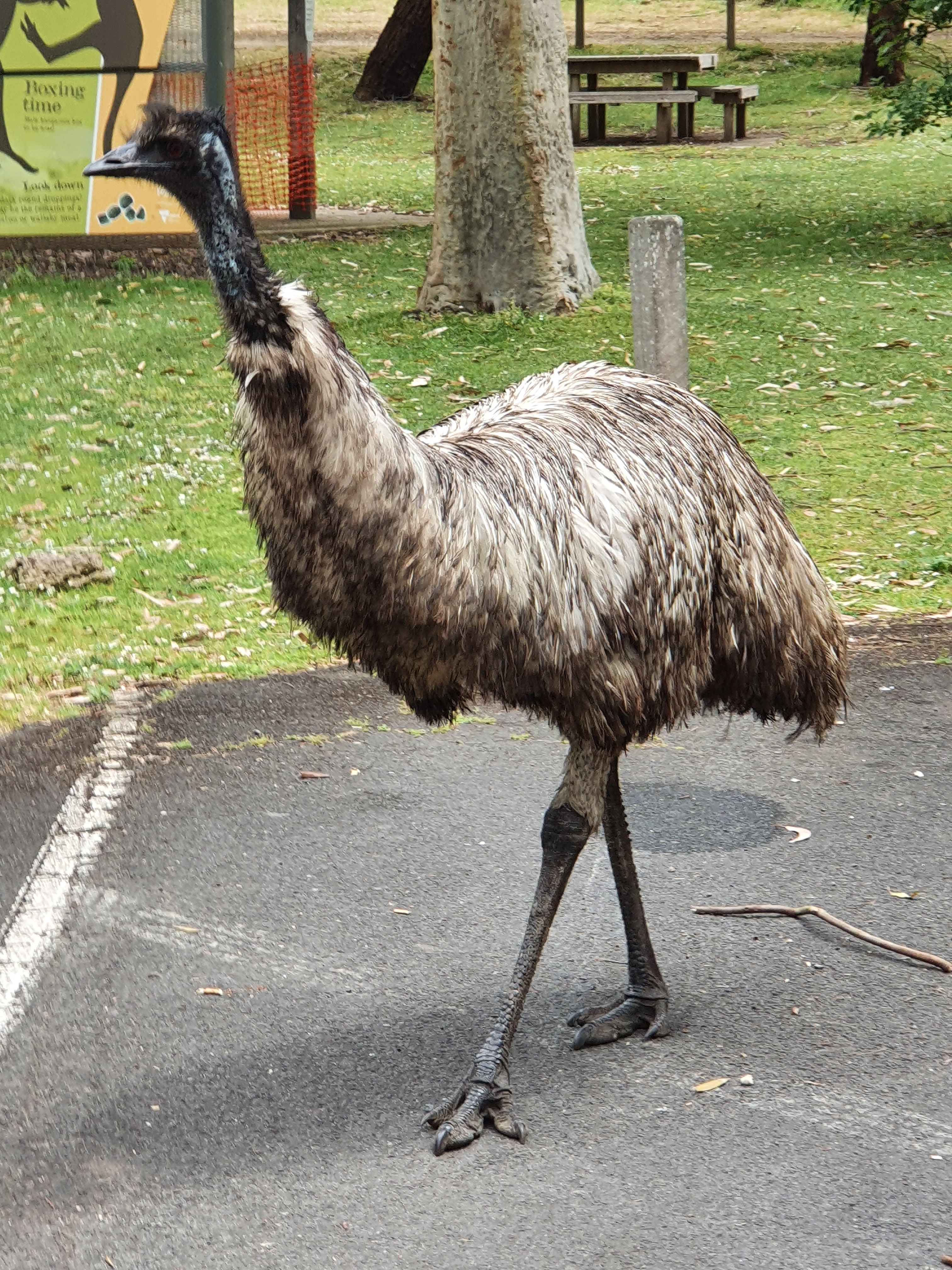
Tower Hill is renowned for its wildlife, with 150 species of birds, grey kangaroos, koalas and… emus. I had encountered the emus of Tower Hill before. One tried to steal an ice cream from my son on a previous trip. (At a winery picnic an emu stole one of those hard umbrella-shaped lollies on a stick from a friend’s child and we watched in horror the lollie’s progress down that poor emu’s very, very long neck).

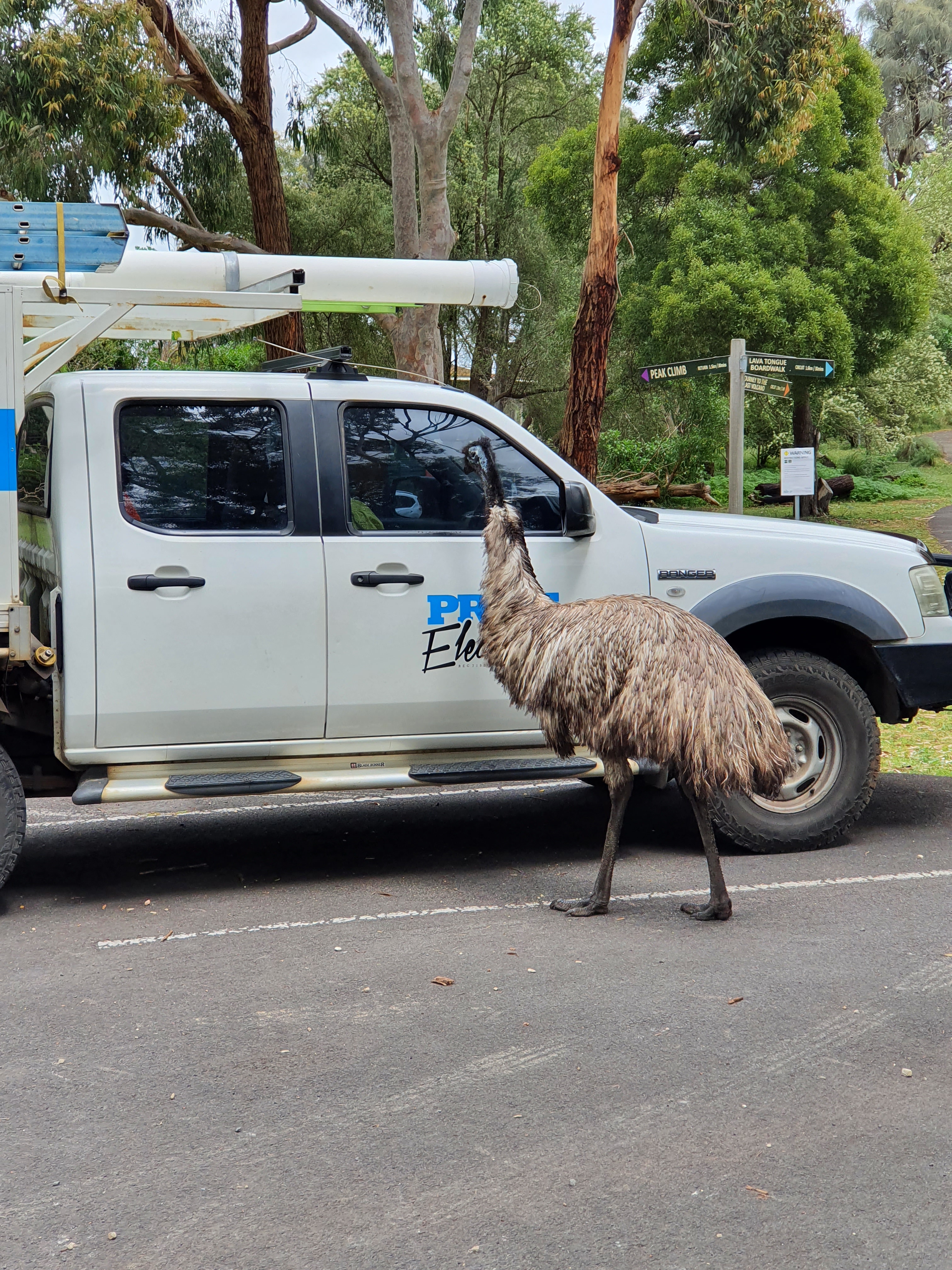
This time my husband and I looked on fascinated as the emu in the photograph strode over to a tradie taking time out to eat lunch in his ute with the window open. As the emu approached, the sensible man quickly closed his window. Then we all watched in amusement as it knocked on the window with its beak for about a minute before walking away in disgust when the man refused to wind down the window and offer it his sandwich.

The rangers ask that you don’t feed the animals. But I think they forgot to tell the emus.

Road Trip One

The furred and feathered friends you make are the highlight of any road trip.

One of the best aspects of research has to be the road trip. In researching The Secrets of Bridgewater Bay I made several road trips. I dragged my partner around south west Victoria a couple of times (posts to follow) but exploring North Devon on a trip to the UK was most exciting for this Australian author.

The rugged coastline is wild and reminded me a great deal of the Victorian coast. The biggest difference between the two is that North Devon is so green and lush, whereas the south west coast of Victoria is sheer rock with windblown coastal scrub. The Devon coast is known for its smugglers and wreckers in centuries past, while this region of Victoria is known as the Shipwreck Coast. Both are highly dramatic and make for wonderful scenery.

She noticed the headlands jutting out into the Bristol Channel, like giant paws clawing a tenuous hold from the sea

The Secrets of Bridgewater Bay

Our road trip around North Devon included getting lost on Exmoor in a fog because I thought I knew better than the satellite navigation. I still say it deliberately led me astray! We had a few close calls on those narrow one-lane country roads too until we got the hang of the lay-bys.

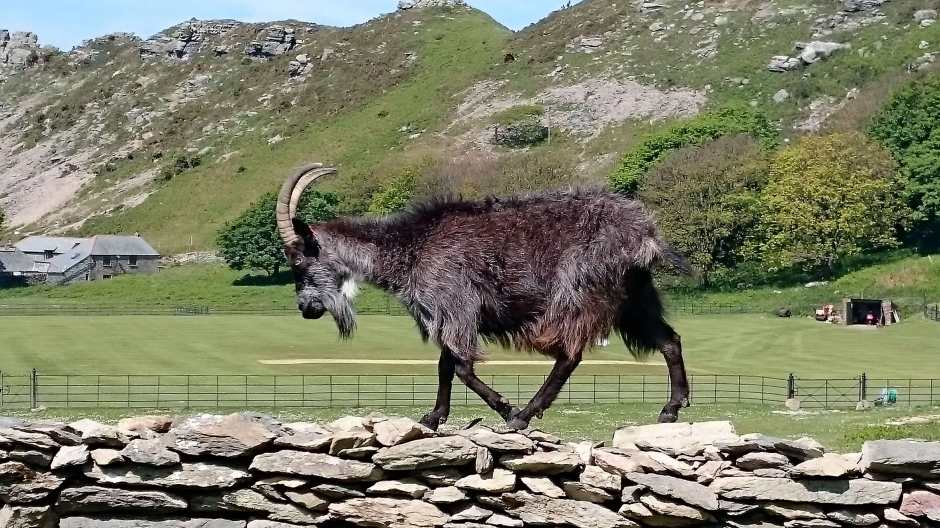
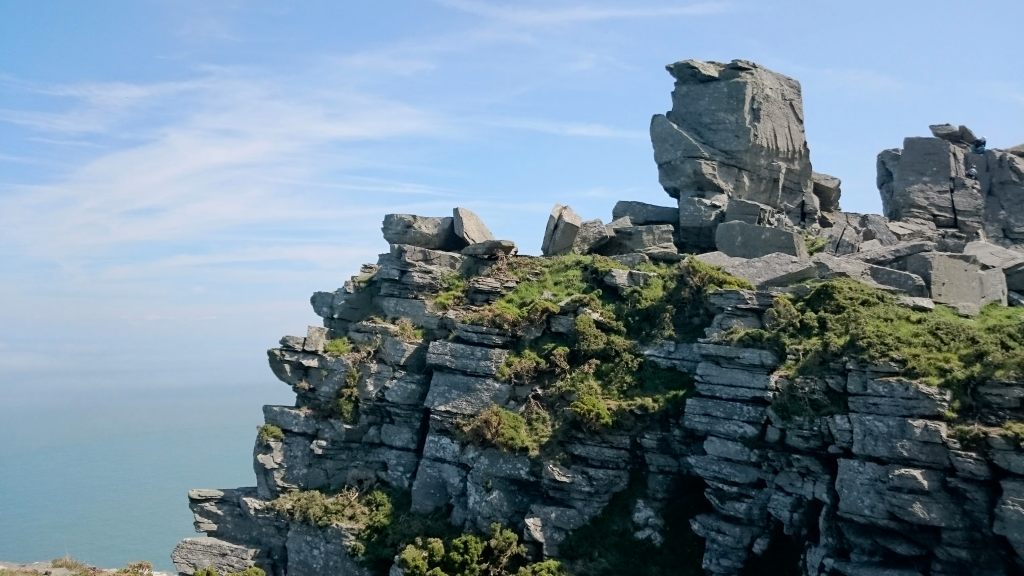
We were charmed by Ilfracombe, Lynton and Lee Bay but it was Valley of the Rocks where we had our most surprising encounter. I’d read about the feral goats living in the area and was scanning the rock formations searching for them, quite excited to spot a few in the distance, when I turned around and discovered these fellas walking along the top of a stone wall. Of course I had to include them in the book.

Feral goats at Valley of the Rocks